
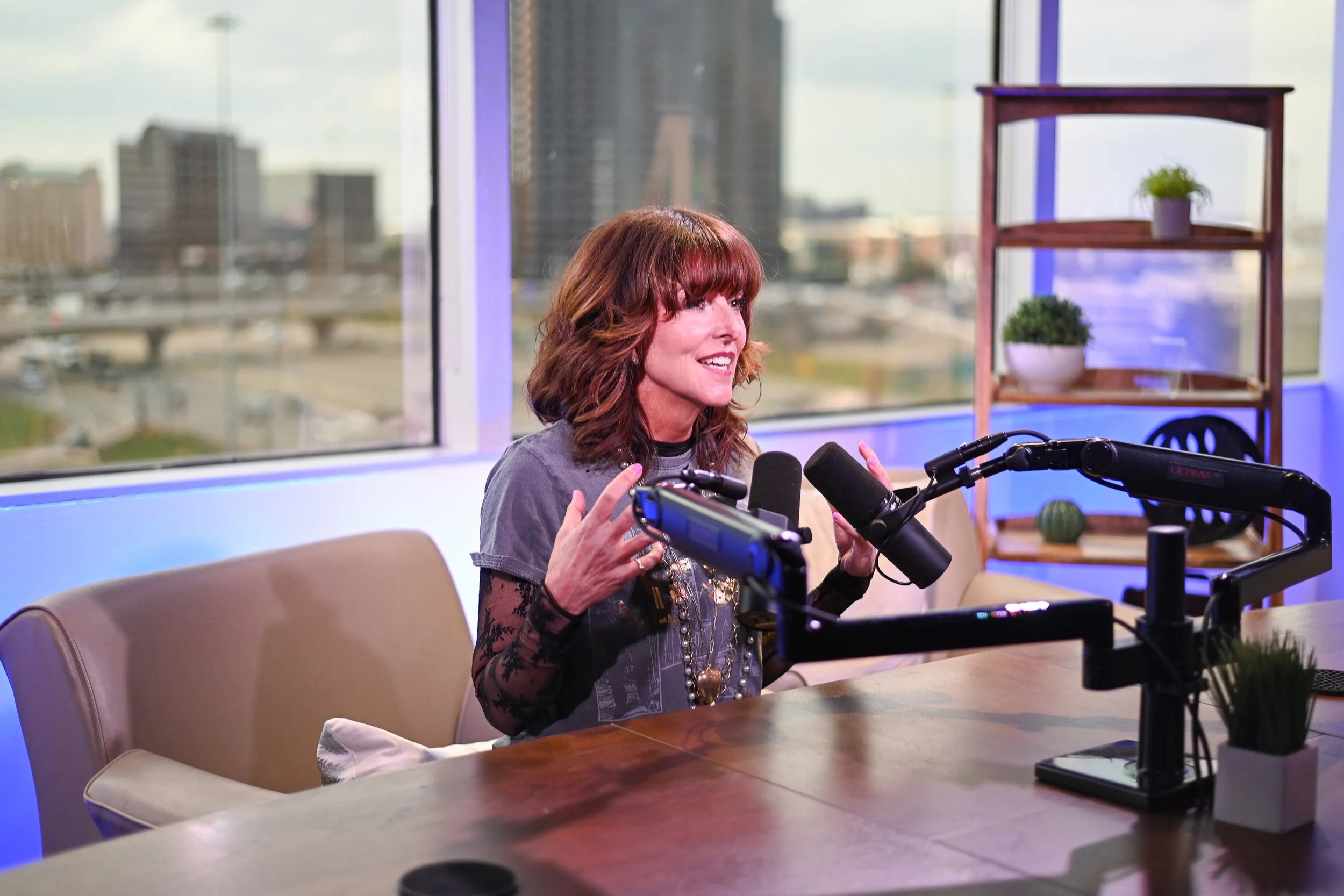
Natalie Johnson, Co-Founder and Chief Visionary at ViDL Work
Natalie Johnson has been an entrepreneur her entire life by observation. Her mother ran a health club, and her father owned a pharmacy and a home healthcare center. By high school, Natalie was already contracting as a personal trainer, teaching group fitness classes, building something of her own. Self-employment wasn't a leap. It was simply how her family operated.
Years later, that same instinct led her to co-found ViDL Work, a workplace culture transformation firm based in Seminole, Florida, alongside business partner Rebecca Johnson. Together they built a team of 13 and a practice rooted in a conviction that the relationships between people are what make organizations worth working for. Their clients ranged from Deloitte to small non-profit organizations. Culture, as Natalie describes it, is all about the way people relate with each other.
And then, in early 2024, the ground shifted.
A Hard Season
When federal mandates effectively barred organizations from investing in diversity, equity, and inclusion initiatives, ViDL Work felt the impact immediately. Their work—culture transformation, belonging, trust-building—sat close enough to DEI that clients were told they couldn't spend on it. In a matter of weeks, ViDL lost 45 percent of its business. They had to let a full-time employee go. By Q1 of 2025, the company was financially unstable.
At the same time, Natalie and Rebecca were wrestling with a tension every growing founder knows: they were doing so much of the work themselves that they had no room to actually run the business.
"It's a really hard transition to go from the founders doing the work to the founders not doing as much of the work," Natalie says. "We need to be sitting in seats where we're managing and running the company, but we can't do that if we're out there coaching and facilitating all the time."
She needed someone who had been through this before. Not a consultant. Not a course. A mentor.
Finding Jim
Natalie had never had a formal mentor. She'd had people she admired and learned from over the years but nothing structured. That changed at a conference in Miami, where she sat in on a lunchtime session featuring the CEO of a Catalyst, Inc. The speaker was, by Natalie's estimation, "five or ten steps ahead" of where ViDL Work was. She was describing exactly the challenges Natalie and Rebecca were navigating.
Natalie couldn't bring herself to ask a stranger to be her mentor. But she did ask where to find one.
A woman nearby mentioned a handful of resources. One of them was Micromentor.
Back at her office, Natalie searched the list and found her way to the platform. She created a profile, started browsing, and connected quickly with James "Jim" Simons, a mentor with a background spanning military service, entrepreneurship, venture capital, and years of helping companies start, grow, and sell. The match was fast. The conversations started soon after.

James "Jim" Simons, Mentor at Micromentor
A Mentor Who's Been There
Jim came to Micromentor through his own sense of mission. He had served as a Fellow with the U.S. Department of State, working on economic development and entrepreneurial initiatives in Africa. When that chapter ended, he was looking for a way to continue.
"I discovered Micromentor afterward and looked at it as a continuation of that mission on a global basis," he says.
What Jim brings to mentorship is hard to manufacture: he's been the founder in the room. He's raised capital, built operations, navigated the moment when a company needs to stop being a startup and start being a business. "I try to give the advice I wish I had when I started my first business," he says. "I can always relate because I've been there."
When Natalie connected with him, he recognized immediately what she and Rebecca were facing. Not just the financial hit from the DEI mandate fallout, but the deeper structural question: what does ViDL Work look like in ten years, and how do they get there without burning out or losing what makes it special?
"Natalie and Rebecca are very experienced businesswomen," Jim says. "I acted more as a sounding board. What happened was, they took a step back and re-evaluated their entire business. I feel that has set them up for great success moving forward."
Thinking Differently About Growth
Their conversations ranged widely. Should ViDL Work take a small business loan? Seek investors? Start preparing the company for a future sale? Jim had navigated all of it, with multiple companies, across multiple cycles. He could tell them what each option one actually felt like from the inside.
One of the most clarifying moments came when Jim introduced Natalie to the concept of the Small Giants—companies that chose, deliberately, to stay small and become exceptional at what they do, rather than scaling for its own sake. The idea clicked.
"Jim helped us see that we don't need investors," Natalie says. "That's going to create way more problems. We can actually be self-sufficient with some marketing help. And the smaller you stay, the better you will be and the higher quality your own culture will be."
He also pushed them to think differently about their next hire. Natalie and Rebecca had assumed they needed to bring in a CEO to help them step back from delivery. Jim disagreed. What they really needed, he told them, was someone passionate about marketing through AI: someone who could build the systems and visibility that would drive growth while the founders stayed focused on what they do best.
More recently, Jim has brought his own evolving interest in AI into the relationship, sharing what he's learning, asking questions about how ViDL Work should be thinking about integration. The mentorship, Natalie notes, has never felt one-directional.
Recovering and Rebuilding
A year ago, ViDL Work was in crisis. Today, it is back to stability and profitability. The team is intact. And Natalie and Rebecca have something they didn't have before the hard season: a picture specific enough to act on.
They've named it the Culture Journey Collective, a coherent product ecosystem bringing together their certifications, their trainings, their book, their podcast and an event planned for next year. Their first book publishes August 4th. The framework they've spent years building is now in writing, ready to reach an audience they couldn't have found any other way.
"A year ago, when we started working with Jim, was right when we were hit," Natalie says. "He helped us refocus our efforts to get out of the hole. And we're back now."
When asked to characterize what made the difference, Jim is characteristically direct. "What I have learned from years of mentoring is how indomitable the human spirit is."
What Mentorship Actually Does
Natalie feels clear about how Jim has supported her and Rebecca.
"It's increased our confidence in what we're doing," she says. "When we've had issues come up, we go to Jim. He's able to show us that we already have what we need. We'll often be really worried and then we go to Jim and realize that we’re on the right track, we just need assurance."
That confidence, she says, is what allows them to stay focused, make better decisions, and do the work that brought them to this in the first place: helping organizations prioritize and elevate human relationships as the world evolves.
"A mentor is so valuable because it's an unbiased person who has no real investment in your company and has already been through what you have. It's like your mentor is you, sitting on the other side of your journey, having already completed it, and being able to guide you on how to get there,” says Natalie.
