
From Survival to Strategy: How Mentorship Helped Cheche Build a Business and a Future
In the heart of a Kenyan slum, Faith Chemutai “Cheche” built a business rooted not just in commerce, but in community. Chechekibe, her food kiosk, sells traditional vegetables, grains, and household staples to neighbors who depend on it every day. But behind the kiosk is a story of resilience, strategy, and the quiet power of having someone in your corner.
A Foundation Built on Resilience
Cheche has lived with sickle cell disease her entire life. For 23 years, the physical, emotional, and financial toll of her condition shaped everything; her family sold their home and land to cover her medical care. Rather than being defined by that loss, Cheche was fueled to restore what her family had lost and sustain herself.
After receiving entrepreneurial training from a mentor, she saw a path forward. She opened Chechekibe, a name woven from her own name and those of her siblings, Chebet and Kibet, as a symbol of unity and shared purpose. The kiosk was established to become something more than just a source of income. It represents a welcoming space where her community can access high-quality, nutritious food rooted in culinary heritage. It also became her first step toward reclaiming what they had lost and securing a future.
“What motivated me was the idea of ‘growth from within.’ I wanted to start something in the slum that provides a quality service and keeps resources circulating within the community. It’s about more than just food; it’s about showing that there is economic potential here.”
A Kiosk at the Heart of the Community
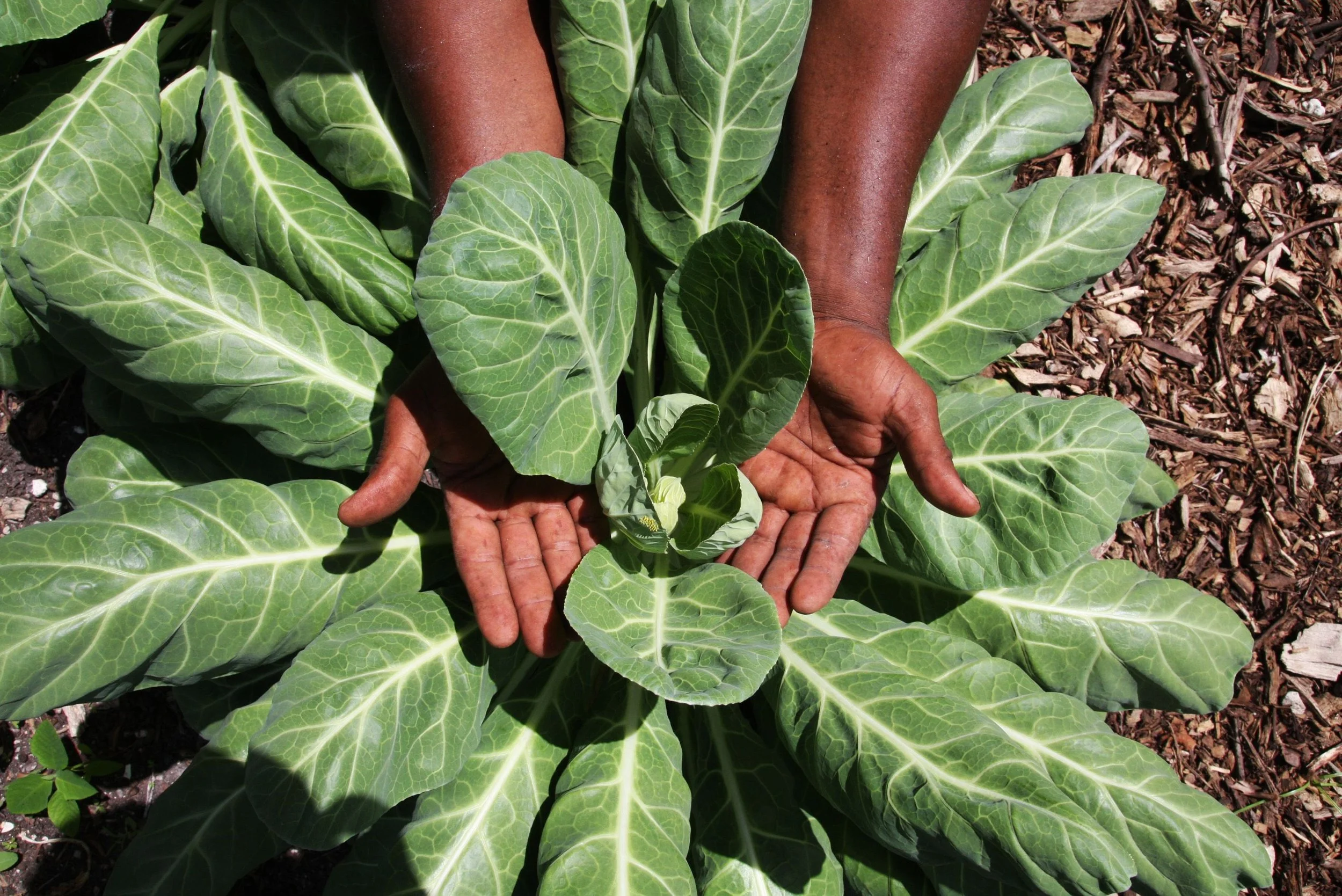
Chechekibe is a one-stop shop for daily essentials. Cheche stocks a wide variety of traditional “kienyeji” vegetables like Managu, amaranth, cowpeas, pumpkin leaves alongside dry grains like maize, beans, and lentils. She also sells Munyu, a multi-purpose, traditional food tenderizer used by the Luhya community in Western Kenya to soften tough vegetable fibers and meats, preserve color, and enhance flavor.
Her customers are the heartbeat of the community: local individuals and families within the slum, traditional foodies, health-motivated consumers, and budget-conscious households. They are neighbors who need affordable, fresh, and reliable access to daily staples without traveling far or paying inflated prices. For many, Chechekibe is also a safety net. Cheche extends small lines of credit to trusted neighbors during dry spells, ensuring no one goes hungry at the end of the month.
Finding Micromentor and a New Way of Thinking
Cheche had passion and drive, but she was navigating the realities of running a business largely alone. Managing weather exposure, limited access to startup capital, living with sickle cell disease, perishable inventory, balancing cash flow, and competing in a high-density market were daily pressures that trial and error alone couldn’t solve. She began researching platforms designed to support entrepreneurs who lacked capital for professional consultancy.
That search led her to Micromentor. Micromentor connected her to a mentor, Gregory, who understood both the practical demands of small retail and the unique challenges of operating in an informal settlement.
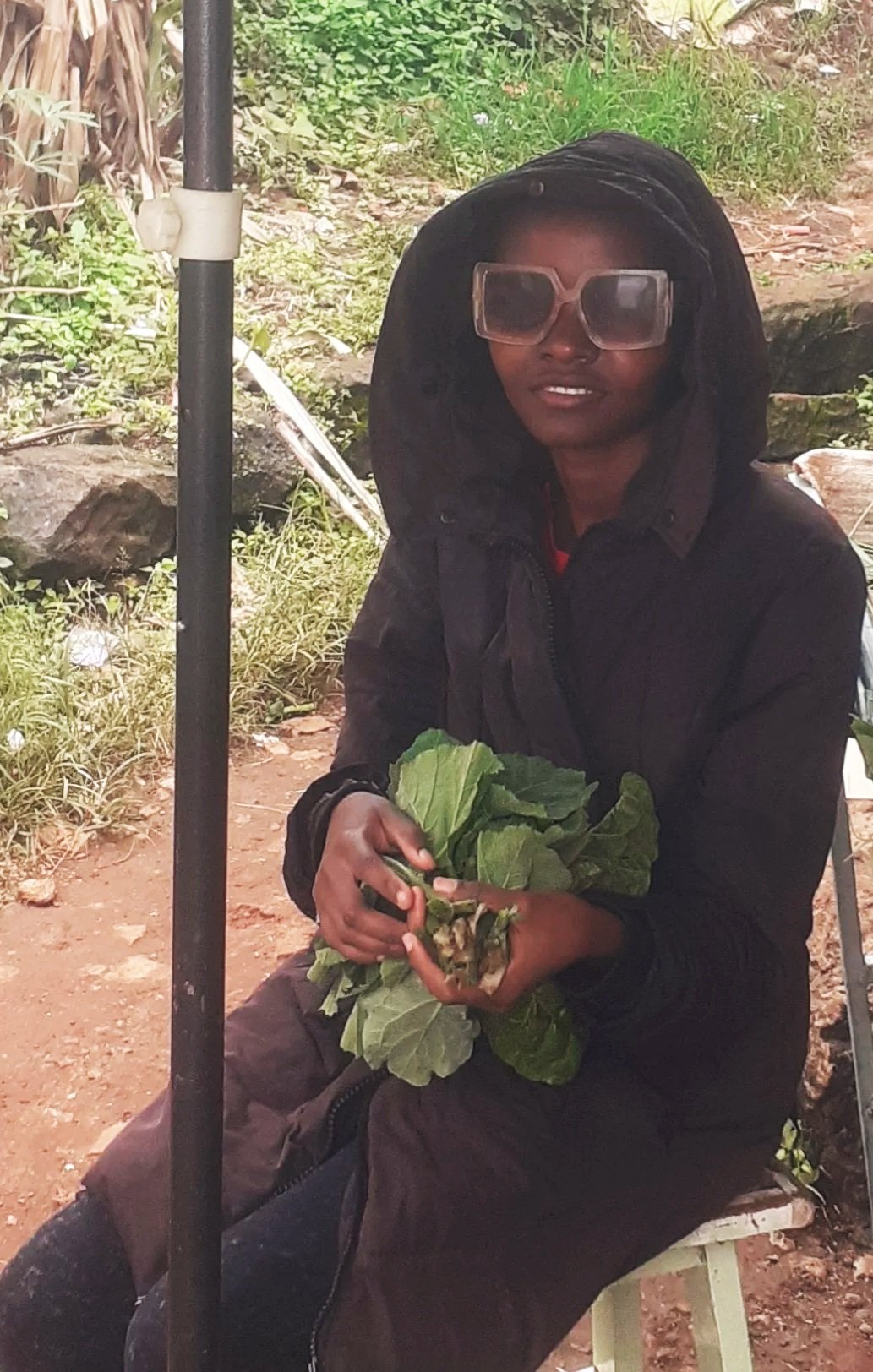
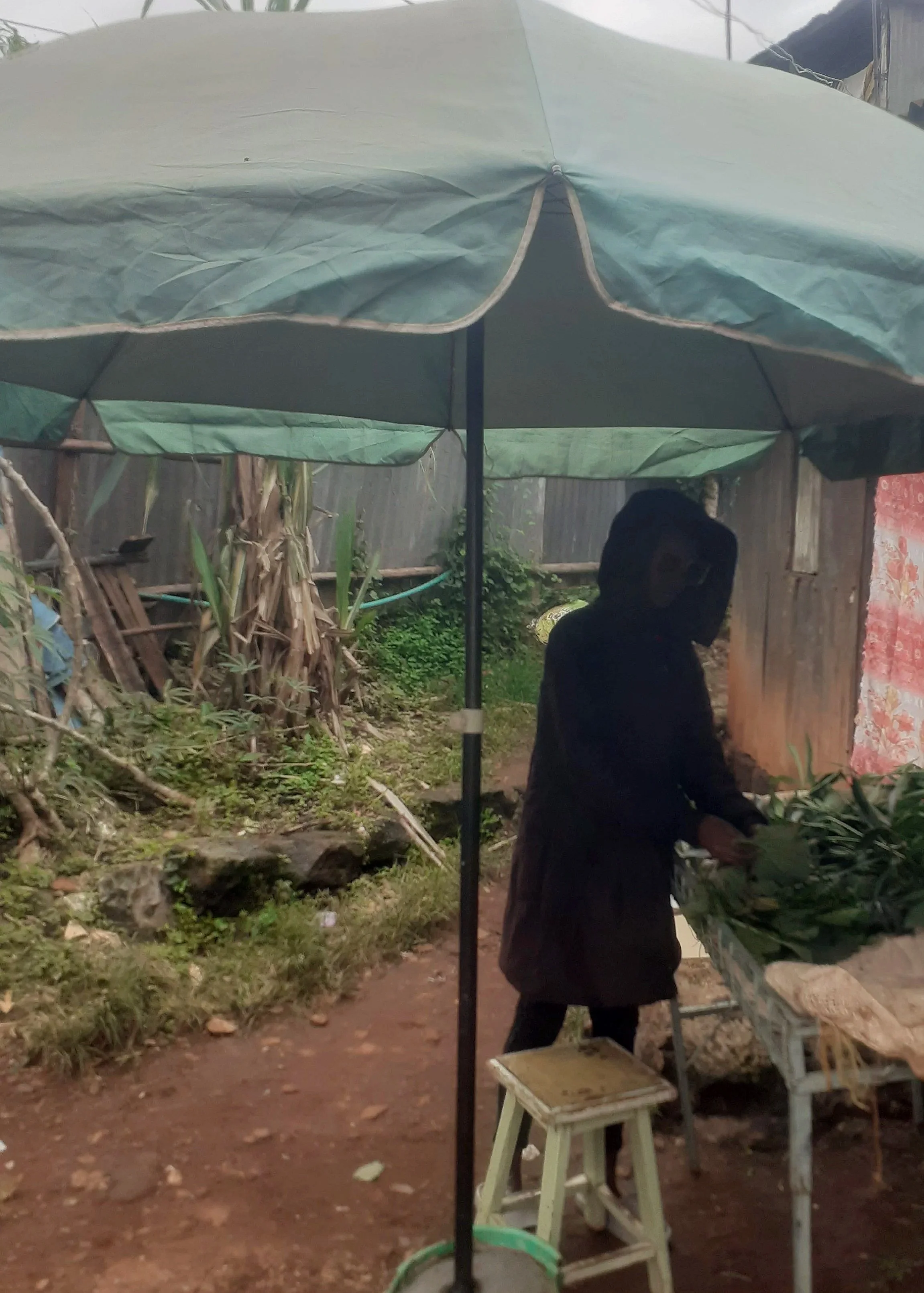
Cheche selling traditional vegetables at her food kiosk in Kawangware, Kenya.
“[Micromentor] turned out to be the best decision for my kiosk. It connected me with a mentor who truly understood my vision and helped me stabilize my operations.“
Her mentor specifically helped her with small business strategy, retail and inventory management, market analysis, and strategic planning and forecasting.
Three years later, that relationship is still going strong through WhatsApp check-ins and email exchanges, spanning continents and circumstances.
From Surviving to Strategizing
The changes Cheche made with her mentor’s guidance were concrete and lasting. She moved away from “pocket accounting,” mixing personal and business funds, to a formal record-keeping system that shows her exactly what she earns each day. She learned to track which products move fastest, so capital is never tied up in slow-moving stock. She negotiated better prices with suppliers and set clear, fair boundaries around customer credit. And she has learned to build customer loyalty to standout in a high-traffic area where competition is high.
“Beyond the technical skills, my mentor has provided the emotional support needed to stay motivated. My mentor helped me realize that my health and location are parts of my story, they aren’t the ceiling of my potential. I stopped seeing myself as a patient trying to work and started seeing myself as a resilient entrepreneur. That identity shift has been the biggest change.”
When political instability in 2024 threatened to shut down the kiosk entirely, her mentor stepped in with ideas that helped her navigate the crisis, keep her doors open. She moved from a survivalist mindset.
“My mentor helped me see my kiosk not just as a means of survival, but as a professional enterprise with the potential to scale.
Having someone experienced to bounce ideas off of has removed the "fear of the unknown." Whether it’s deciding which grains to prioritize or how to manage a food kiosk’s logistics, I now function with a sense of professional authority. I no longer feel like I am guessing; I feel like I am executing a plan.”
Impact That Ripples Outward
Cheche’s growth is rippling outward into the broader community. Not only has her business doubled, but she now shares business tips with other small-scale vendors in the area, passing forward the lessons her mentor gave her. She serves her community not only as a food supplier, but as a quiet model of what is possible that a young woman living with a chronic illness, operating out of a stall shaded by an umbrella, can build something structured, sustainable, and meaningful.
Her long-term vision is equally grounded and ambitious: to grow Chechekibe into an enterprise capable of restoring her family’s home, the one sold to keep her alive. Every grain she sells, every record she keeps, every strategy she refines is momentum toward that dream. For a deeper look into Cheche’s world, check out her first published book, My Life in the Kawangware Kenya Slums.
Cheche’s story is a reminder of what Micromentor makes possible: when entrepreneurs have access to experienced guidance and genuine human connection, struggle transforms into strategy. And a kiosk becomes the foundation for a sustainable livelihood, a restored family, and a stronger community.
